Stop Shrinking Your Brand to Fit In: Why Showing Up Fully as a South Asian Founder Actually Closes More Deals
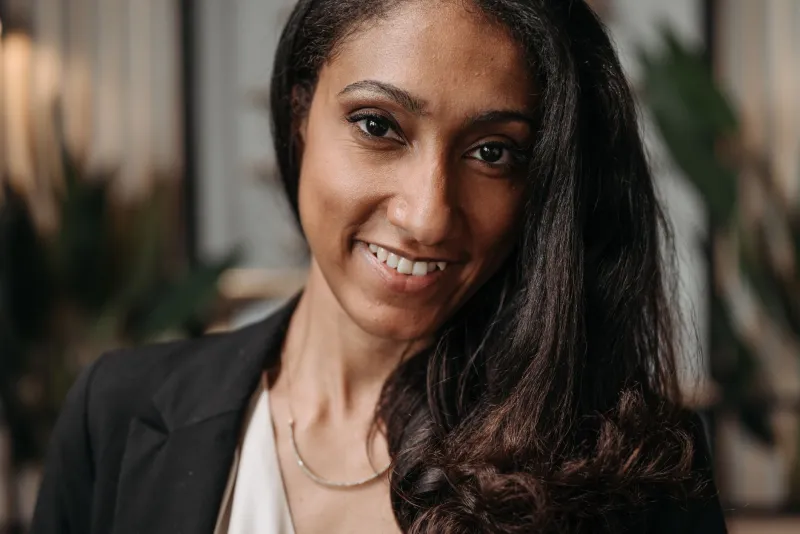
Let me be direct about something: the advice to "make your brand more universally appealing" often means "make it look less like you."
South Asian founders hear this in a hundred different ways. Soften the name. Swap the profile photo for a logo. Don't mention where your family is from. Lean into the product, not the person. And underneath all of it is a quiet assumption — that your full identity is a barrier to mainstream US success, and that the smart move is to file down the edges.
I want to push back on that. Hard.
Not because cultural visibility is always easy or without risk. But because the evidence increasingly shows that the code-switching strategy — showing a curated, flattened version of yourself to appeal to the broadest possible audience — is both personally costly and commercially counterproductive.
The Performance Tax Nobody Talks About
Code-switching isn't free. There's a cognitive and emotional cost to constantly monitoring how much of yourself is appropriate in a given context — which words to use, which parts of your background to mention, when to soften an accent, when to lead with the MBA and hold back the family story.
Research published in the Journal of Experimental Social Psychology found that identity suppression — actively concealing aspects of your identity — depletes cognitive resources in ways that directly impair performance. You're literally thinking less clearly when you're performing a version of yourself rather than being yourself.
For founders, this isn't abstract. Every pitch where you're managing your self-presentation is a pitch where you're not fully focused on your customer's problem. Every brand campaign built around an identity you're not sure you're allowed to claim fully is a campaign that's going to feel slightly off — to you and, eventually, to your audience.
Generic Brands Are Drowning in a Crowded Market
Here's the strategic reality of the current US market: differentiation is the only thing that cuts through. Consumers are overwhelmed with options, ad-fatigued, and deeply skeptical of corporate messaging. What they're responding to — what's actually converting — is specificity, personality, and authenticity.
A brand that's been carefully sanded down to appeal to everyone tends to resonate with no one in particular. It's fine. It's professional. It doesn't make anyone feel anything.
Contrast that with a founder who leads with a clear, specific identity — their background, their values, their particular way of seeing the world — and builds their brand around it. That founder is immediately recognizable. They attract customers who actually share their values. They generate word-of-mouth from people who genuinely connect with them. And they repel customers who were never going to be a great fit anyway, which saves everyone time.
This is what premium positioning actually looks like. It's not about being expensive — it's about being irreplaceable.
What the Conversion Data Tells Us
Brands built around authentic founder stories consistently outperform generic alternatives on the metrics that matter. According to Stackla's consumer research, 86% of consumers say authenticity is a key factor when deciding which brands they support. Edelman's Trust Barometer has found for years running that founder-led, story-driven brands generate significantly higher trust scores than faceless corporate brands.
And within South Asian diaspora communities — which represent a substantial and fast-growing segment of US purchasing power — the preference for founders who show up authentically is even more pronounced. These consumers are sophisticated. They can tell when someone is performing assimilation versus genuinely sharing their perspective. And they reward the latter with loyalty that most brands spend millions trying to manufacture.
The math isn't complicated: if authentic visibility increases conversion rates, decreases churn, and generates stronger word-of-mouth, then the cost of hiding your identity isn't just psychological — it's financial.
Strategic Visibility vs. Every Moment Being a Cultural Statement
There's an important distinction to make here, because "show up authentically" can get misread as "make everything about your South Asian identity all the time."
That's not what this is about.
Strategic cultural visibility means knowing which elements of your background and values are genuinely relevant to your brand story — and leaning into those deliberately, rather than either hiding them or overcorrecting into performative ethnic branding.
For a South Asian founder running a logistics company, strategic visibility might mean talking openly about the family business background that gave you operational intuition, or the immigrant work ethic that shapes your service standards. It probably doesn't mean making every piece of content about South Asian culture specifically.
For a South Asian founder in the wellness space, the cultural connection might be much more central — Ayurvedic principles, holistic family health traditions, multi-generational approaches to wellbeing. In that context, your background isn't a side note; it's the entire product differentiation.
The point is to make intentional choices rather than defaulting to erasure out of anxiety.
The Quality of Leads Changes When You Stop Hiding
One thing founders consistently report after committing to authentic brand visibility: the nature of their inbound inquiries changes. They get fewer tire-kickers and more people who've already self-selected based on genuine alignment.
When your brand clearly communicates who you are and what you stand for, the people who reach out are the people who already want what you specifically offer. That means shorter sales cycles, higher close rates, and customers who stick around because they chose you — not just your price point or your SEO ranking.
Compare that to the generic brand approach, which tends to attract a wide range of prospects who then need to be convinced, educated, and persuaded over a long sales process. You close some of them. You lose a lot of them. And the ones you close often leave when a competitor runs a better discount.
Own the Differentiation You Already Have
Here's the bottom line from where we sit at MarketingWala: the most defensible brand position available to most South Asian founders is the one they're already sitting on — their actual story, their actual values, their actual cultural perspective.
You don't have to manufacture differentiation. You don't have to spend money inventing a brand personality. You have one. It's specific, it's real, and in a market drowning in sameness, that's genuinely rare.
The question isn't whether your identity is an asset. It is. The question is whether you're willing to stop treating it like a liability.