From Group Chat to Growth Engine: The Channel Stack South Asian Founders Need in 2026
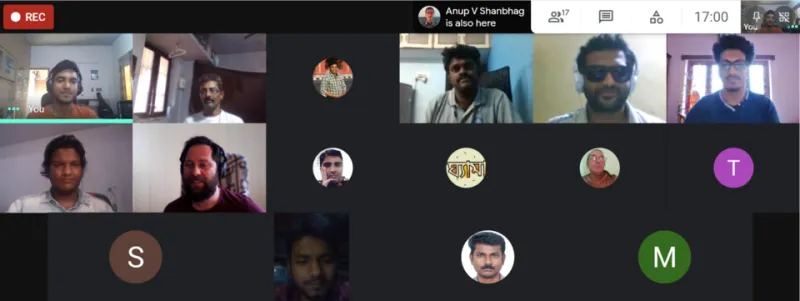
Photo: Satdeep Gill, CC BY-SA 4.0, via Wikimedia Commons
Your WhatsApp group is a small-business miracle. It is also a ceiling.
I have watched South Asian founders build real revenue inside a family group: a bakery in Edison taking Diwali orders, a tax office in Dallas filling appointments through aunties, a salon in Chicago running on DMs and referrals. It works. Until it doesn't.
The problem is not WhatsApp. The problem is treating a community channel like an acquisition strategy. Community is where trust lives. It is not where scalable discovery lives. If your entire marketing plan depends on people you already know, your growth is capped by the size of your contact list.
The ceiling is not a mystery
Most South Asian-owned businesses hit the same wall for four reasons.
First, your network is finite. Even the most connected founder runs out of cousins, college friends, and temple acquaintances. Second, community channels are invisible to search. A family looking for a halal caterer in Houston cannot find you inside your group chat. Third, DMs and group messages do not compound. You cannot measure them cleanly, retarget them, or hand them to a team member without losing context. Fourth, platform risk is real. A number change, a banned account, or a quiet algorithm update can cut off your pipeline overnight.
None of this means you should abandon the intimacy. It means you need to build a stack that keeps the intimacy and adds a front door.
Keep, layer, retire: a practical channel audit for 2026
Here is how I would sort the channels most South Asian founders are already using.
Keep: WhatsApp and community groups, but change the job
Keep WhatsApp for retention, customer service, and referrals. Use it to nurture people who already know you. Do not use it as your only top-of-funnel channel. If a group is doing sales, make sure someone is also capturing names and emails with permission.
Keep: Instagram, but make it proof, not a storefront
Instagram still matters, especially for food, beauty, retail, and events. But your feed should not be the only place people can buy or book. Link to a simple website or booking page. Use Stories for behind-the-scenes trust. Use DMs for conversations, not as your customer database.
Layer: email
Email is boring, owned, and still one of the highest-ROI channels for small businesses. Start with a simple list and a reason to join: a seasonal menu, a first-order discount, a checklist, a local event invite. Send one useful email a month in 2026. Do not overcomplicate it. A plain-text note from the owner beats a glossy newsletter nobody reads.
Layer: SMS, with real compliance
Text messages are powerful for appointments, order pickups, and local offers. They are also heavily regulated in the US. You need clear opt-in, a way to opt out, and a record of consent. Do not add your WhatsApp contacts to an SMS tool and call it a day. That is how small businesses end up with complaints. Use SMS for people who explicitly ask to hear from you.
Layer: local search
Google Business Profile is the closest thing to a free storefront in the US. Claim it, add photos, set hours, list services, and ask for reviews. If you serve a metro area, your profile is often the first impression. A complete profile with recent reviews can outperform a polished website for local intent searches.
Layer: paid ads, but small and tracked
Paid ads are not a magic switch. They are a way to buy attention you cannot earn fast enough. Start with a $10 to $20 daily test on Google Search for high-intent local terms, or on Meta for a specific offer. Track calls, forms, and in-store redemptions. If you cannot measure it, do not scale it.
Retire: untracked flyer spending
Your cousin who handles the flyers is not the problem. Untracked spending is. If you print 5,000 flyers and cannot tell whether they brought in ten customers or zero, retire that spend until you can add a QR code, a promo code, or a landing page.
Retire: DM-only customer service
DMs are fine for conversation. They are a terrible CRM. Move repeat questions into a simple FAQ, a booking link, or an email autoresponder. Save the DMs for actual relationships.
The compliance part nobody wants to talk about
In the US, SMS marketing runs through TCPA rules. Email runs through CAN-SPAM. Both require consent, identification, and an easy way out. This is not legal advice, but the practical version is simple: ask before you text, make unsubscribing easy, and never scrape contacts from a group chat into a marketing tool.
The good news is that compliance makes you look more professional. A clean opt-in process signals that you respect your customers. That matters in tight-knit South Asian communities, where reputation travels fast.
A simple 90-day build
Month one: claim and clean up your Google Business Profile, add an email capture link to your website and Instagram bio, and ask your ten happiest recent customers for reviews.
Month two: add a paper or digital sign-up at the counter or in your booking flow. Start one welcome email. Train one person to ask for SMS opt-ins at checkout.
Month three: run a small paid test with a clear offer and a tracked landing page. Review the numbers weekly. Keep what works. Kill what does not.
The goal is not to become a faceless marketing machine. The goal is to stop relying on memory, favors, and one overloaded group chat. Keep the warmth. Add a system. That is how a group chat becomes a growth engine.