Your Quiet Excellence Is Killing Your Growth: How South Asian Founders Can Stop Being the Best-Kept Secret in Their Industry
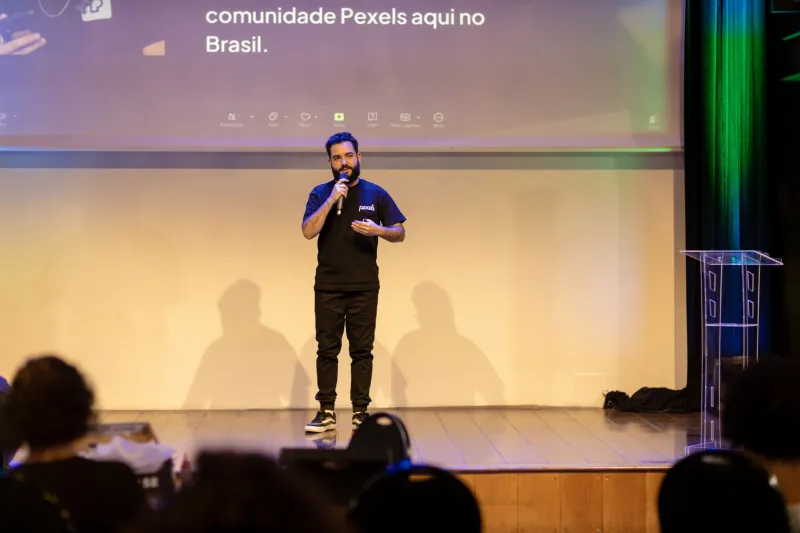
There's a particular kind of frustration that a lot of South Asian founders know well. You're delivering exceptional work. Your existing clients love you. Referrals trickle in just often enough to keep things moving. But growth feels like pushing a boulder uphill — slow, exhausting, and weirdly disconnected from how good you actually are at what you do.
Here's the uncomfortable truth: the problem isn't your product. It's your presence.
Or more precisely, the lack of it.
The Word-of-Mouth Trap
Referrals and community trust are genuinely powerful. For a lot of South Asian-owned businesses, that's exactly how they got started — someone knew someone, a family friend vouched for you, a community connection opened a door. That model works. Until it doesn't scale.
The US market is enormous, fragmented, and brutally competitive. And the way it works is pretty simple: people buy from people they've heard of. Not necessarily the best option — the most visible one. If a potential customer in Phoenix or Pittsburgh has never encountered your name, your story, or your point of view, you don't exist to them. Doesn't matter how many glowing testimonials are sitting in someone's WhatsApp thread.
Word-of-mouth keeps you alive. Visibility makes you grow.
Why South Asian Founders Systematically Stay Small
This isn't accidental. There are deep cultural wires at play here.
For many South Asian entrepreneurs — especially first-generation founders — self-promotion feels genuinely uncomfortable. There's a strong cultural current that says you let your work speak for itself. You don't boast. You don't put yourself forward. Humility is a virtue, and drawing attention to your own achievements feels uncomfortably close to arrogance.
That value system isn't wrong. But it was built for a different context.
In the US market, especially in the digital age, the person who stays quiet gets skipped. LinkedIn algorithms reward consistent posting. Google rewards content creators. Podcast audiences build loyalty to voices they hear regularly. The entire infrastructure of modern customer acquisition is tilted toward people who show up publicly, share their thinking, and claim their expertise out loud.
When South Asian founders opt out of that system — even for culturally valid reasons — they're essentially leaving the playing field to competitors who are less qualified but louder.
What Invisibility Actually Costs You
Let's make this concrete, because it's easy to treat visibility as a soft, optional marketing nice-to-have.
It's not.
If your business depends entirely on referrals, your pipeline is at the mercy of other people's conversations. You have no control over timing, volume, or the quality of leads. One slow season in your network means a slow season for you.
More importantly, invisibility caps your pricing power. Founders who are recognized as thought leaders in their space — who have a LinkedIn following, who get quoted in industry publications, who speak at events — consistently command higher rates than equally skilled founders who operate in the shadows. Credibility isn't just about reputation. It directly affects what the market believes you're worth.
There's also the compounding effect to consider. Every piece of content you publish, every panel you join, every podcast episode you record builds on itself. The founder who started showing up publicly two years ago is now reaping the rewards of that early investment. The founder who waited is starting from zero today.
Building Visibility Without Losing Yourself
Here's where a lot of South Asian founders get stuck: they assume that becoming visible means becoming someone they're not. Loud. Performative. Constantly selling.
That's not what effective personal branding looks like — and it's definitely not what MarketingWala recommends.
The goal isn't to become an influencer. It's to become findable and credible to the right people at the right moment.
Start with a single platform. Don't try to be everywhere. Pick the one channel where your ideal customers actually spend time — LinkedIn for B2B, Instagram for lifestyle and consumer brands, YouTube for anything that benefits from demonstration — and show up there consistently. Once a week is enough to start building momentum.
Share your perspective, not just your portfolio. The most effective thought leadership isn't "look at this project I completed." It's "here's how I think about this problem." Share opinions on industry trends. Break down a mistake you made and what you learned. Explain your process. That kind of content builds trust faster than any case study.
Use your background as a differentiator, not a disclaimer. South Asian founders often bring a genuinely distinct perspective — cross-cultural fluency, experience navigating multiple markets, insights shaped by a different set of life experiences. That's not something to downplay in the US market. It's a competitive edge. Lean into it.
Let clients do some of the talking. If self-promotion feels uncomfortable, start by amplifying what others say about your work. Reshare testimonials. Tag clients in project announcements (with their permission). Feature case studies. You're still building visibility, but through social proof rather than direct self-promotion.
Commit to a 90-day window. Visibility doesn't happen overnight, and a lot of founders give up before the compounding kicks in. Set a realistic timeline — 90 days of consistent content — before evaluating whether it's working. Track not just follower counts but inbound inquiries, profile views, and whether new contacts mention your content.
The Mindset Shift That Changes Everything
Ultimately, the biggest barrier isn't tactical. It's a belief.
A lot of South Asian founders carry an unconscious assumption that being seen is somehow separate from — or even in conflict with — being good. That real credibility comes from results, not from talking about results.
But in a market as large and noisy as the US, that belief is a luxury you can't afford. Visibility isn't vanity. It's infrastructure. It's how customers find you before they know they need you. It's how you build the kind of trust that converts strangers into buyers without requiring a personal introduction every single time.
Your work is excellent. It's time to make sure the right people actually know that.
Stop being the best-kept secret in your industry. Start treating your visibility like the growth asset it actually is.